
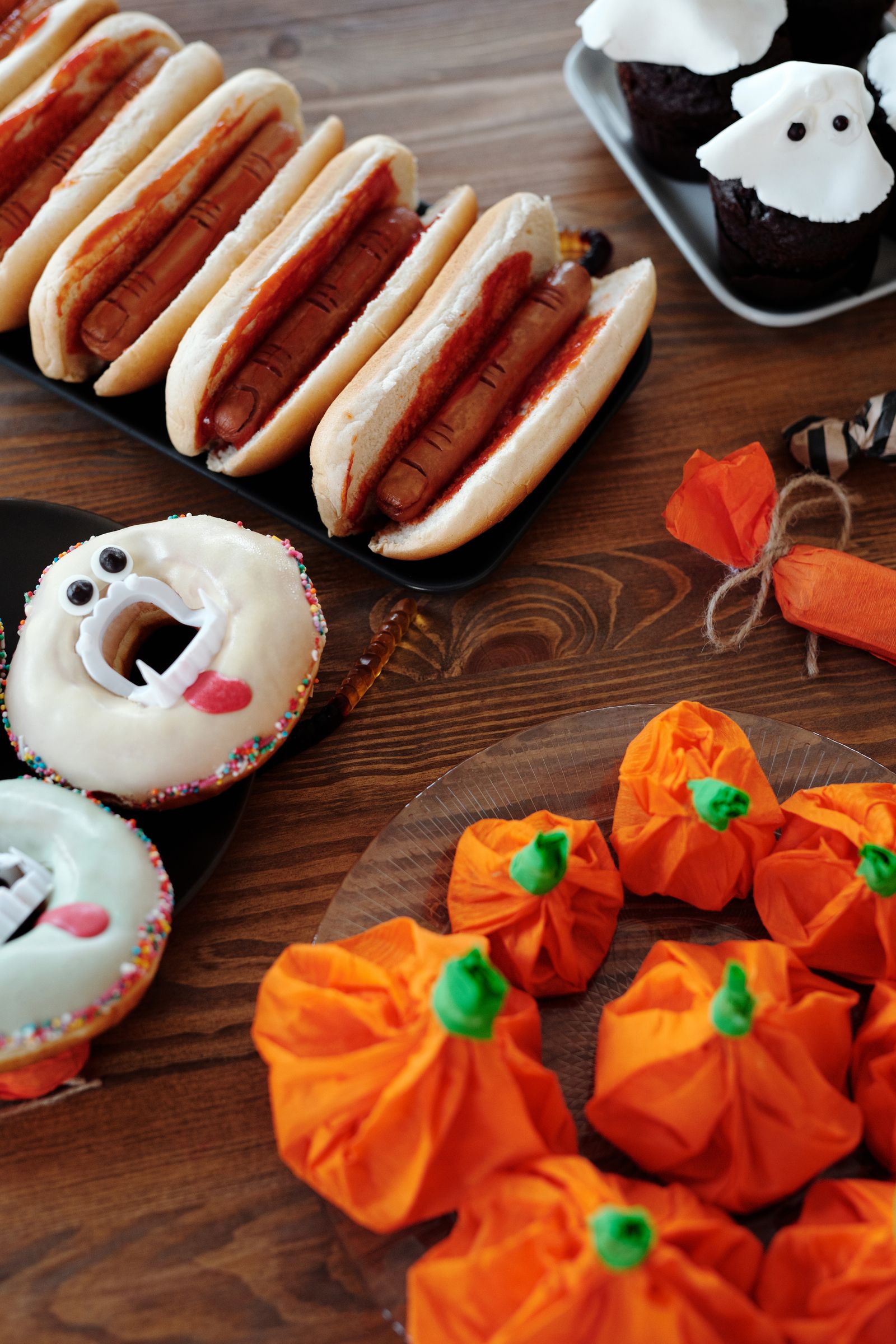
A Halloween party on a budget can feel generous and well organised without a large guest list or a room full of decorations. The useful decisions are usually quite ordinary: when people arrive, what they will eat, where drinks will go and how much time you want to spend managing the evening. A small amount of planning can make the celebration easier to host and more enjoyable to attend.
This guide builds a practical party plan around a defined spending ceiling. It covers the invitation, menu, games, shopping and cleanup rather than assuming you need to buy a complete themed collection. The example amounts are budgeting illustrations, not current retailer prices or a promise that the same event will cost the same everywhere.
Choose the kind of evening before choosing the decorations
Start with one sentence describing the party. It might be “an early family get-together with snacks”, “a small dinner with a Halloween film” or “a relaxed costume evening with friends”. That sentence should make several decisions easier, from the amount of food to the number of seats.
A party described only as “Halloween” can expand in every direction. You may find yourself planning a full dinner, several games, a film screening and an elaborate display even though the time and space do not suit all of them. Choose the main activity and let the rest support it.
Decide the start and finish times before inviting people. A defined window helps guests plan and gives you a realistic frame for food, lighting and any neighbours who may be affected by noise. It also makes it easier to distinguish an evening of snacks from an event where guests will expect a full meal.
Make the guest list work with the space
Count the places where people can comfortably sit, stand and put down a drink. Consider coats, bags and the route to the bathroom as part of the available space. The room capacity suggested by an empty floor is different from the room you will have once food and belongings are in place.
For a mixed-age party, decide whether you need a quieter activity area and who is supervising children. For guests with access requirements, ask what would help them enjoy the evening rather than assuming a standard arrangement will work for everyone.
Keep the initial guest list within the event you can host comfortably. Adding a few people can change more than the food total: serving equipment, seating and cleanup may change as well. If the list grows, review the whole plan instead of only increasing the number of snack packets.
A sample budget for a small Halloween gathering
The following $120 cap illustrates a possible allocation for a small gathering of around eight adults. It is not a quoted cost for feeding eight people and should be adjusted for your menu, location and local prices. The purpose is to give every part of the evening a limit before shopping starts.
| Category | Example allowance | Planning priority |
|---|---|---|
| Food | $54 | Choose a manageable menu before buying themed extras |
| Drinks | $18 | Offer a clear, uncomplicated selection |
| Serving and table supplies | $12 | Check existing dishes and glasses first |
| Decoration | $12 | Concentrate on one visible area |
| Activities | $6 | Use simple games or supplies already at home |
| Reserve | $18 | Cover an overlooked need without starting another shop |
Do not spend the reserve in advance. It is there to make the plan resilient. If you do not need it, you have finished under the cap. That is a better result than turning every remaining dollar into one more decoration or an extra dessert.
Send an invitation that answers practical questions
A clear invitation can prevent several last-minute messages. Include the date, arrival time, expected finish, the kind of food being served and whether costumes are optional. Explain anything important about parking, entry or the setting.
Ask guests to tell you about dietary requirements before you finalise the menu. If you are arranging a bring-and-share evening, assign broad categories instead of asking everyone to bring anything. Otherwise, you may end up with several desserts and no substantial food.
Be considerate about costume expectations. Making dressing up optional or suggesting a simple theme gives guests room to participate within their own budgets. The invitation should make the evening easier to join, not create another shopping obligation.
Build a short menu around one substantial option
Start with the food that will do most of the work. For a dinner, that may be one main dish with straightforward sides. For a snack-based gathering, choose a few foods that can be portioned and replenished without constant cooking. The right menu is one you can manage in the kitchen you have.
Use familiar food and add the theme through presentation. A simple label or a consistent serving colour can make ordinary snacks feel part of the celebration. Buying many novelty-shaped products is not the only way to create a Halloween table.
Write down the preparation steps as well as the ingredients. If several dishes all need the oven or the same work surface just before guests arrive, reduce the menu. A host who is available to greet people contributes more to the atmosphere than another complicated item on the table.
Handle dietary requirements with clear information
Keep ingredient information available for packaged food and write a straightforward list for dishes you prepare. Ask guests what information they need rather than making broad claims that a dish is suitable for everyone. If you cannot confidently meet a particular requirement, discuss a workable plan with the guest before the evening.
Use separate serving utensils where appropriate and avoid moving them between dishes. Think about the way the food will be arranged and replenished, not only the recipe. A clearly labelled option can become confusing if sauces, garnishes and utensils are mixed together during serving.
For families receiving Halloween treats, FoodSafety.gov advises checking commercial wrappers and ingredient labels, including allergen information. For your own party, keeping packaging and ingredient details is a practical way to support those checks without guessing about the contents.
Plan serving and food safety before the table is full
Put serving dishes, utensils and space for used plates into the plan before adding decorations. Decide which foods will be brought out at arrival and which will remain stored until needed. Smaller amounts replenished thoughtfully can be easier to manage than placing every portion on the table at once.
FoodSafety.gov advises keeping perishable food chilled until serving and not leaving it out for more than two hours, or one hour when temperatures are above 90°F/32°C. Those limits are not a target serving schedule; use the food’s preparation and storage guidance and plan the event around appropriate handling.
Set a reminder for checking the table rather than relying on memory while hosting. Make sure you have suitable storage available for food you intend to keep. If something has been handled outside the relevant safety guidance, do not treat putting it back in the refrigerator as a way to undo that.
Keep the drinks arrangement simple
Choose a small selection that suits the gathering and make water easy to find. A clear drinks station can reduce repeated trips through the kitchen. Put it where a queue will not block the entrance or the main food table.
Check whether you already have enough glasses, a jug and somewhere for used cups. If you are serving a prepared drink, label it clearly and keep the ingredient information available. Do not assume guests can identify the contents from its colour or its Halloween name.
Consider the cleanup as part of the serving plan. A tray under the station, accessible cloths and a clear place for used glasses can save several small interruptions during the evening. Buy special tableware only if it solves a real need that existing items cannot cover.
Choose games that do not need a second shopping basket
One planned activity is often enough for a small gathering. Choose something that can be explained quickly and does not require every guest to participate in exactly the same way. Leave space for conversation rather than treating the party as a schedule that has to be completed.
- A themed guessing game: use written clues and a timer you already own.
- A small photo challenge: suggest a few playful poses or scene ideas using the decorated corner.
- A Halloween quiz: prepare a short set of questions suitable for the people attending.
- A relaxed costume showcase: let guests explain their ideas without making an expensive outfit a condition of joining in.
If you are planning a film, check the running time and suitability for your guests before building the rest of the evening around it. Confirm you can access it through a service you already have or include any required payment in the budget. Do not assume a title will be available on a particular platform.
Create one photo corner instead of decorating everything
A small photo area gives the theme a clear place to live. Choose a background with enough room for people to stand comfortably and test it with the lighting you will use. Move everyday clutter out of the frame before buying something to cover it.
Repeat a few colours from the table and add one focal decoration. Keep the area away from routes people need to use. An attractive corner should not create a bottleneck or require guests to move the serving setup whenever they want a photograph.
Our budget Halloween decorating guide explains how to build these focal areas with reusable pieces. If guests want a simple outfit idea, share the last-minute costume checklist rather than suggesting everyone buy a complete new look.
Shop with one list and a clear stopping point
Combine ingredients, serving needs, decorations and activities into one list. Mark what is already available and group the remaining items by where you can obtain them. This helps prevent separate “small” shops from quietly becoming a large total.
For multipacks, compare the quantity you need with the quantity you will receive. A lower unit price does not necessarily make a larger purchase useful for one small evening. Include delivery, required extras and any food you are unlikely to use afterwards in the comparison.
Decide what counts as finished before browsing additional offers. Once the menu, serving plan, one activity and focal display are covered, optional purchases should have to justify themselves. A party does not become better simply because there are more things to carry home.
A calm timeline for the final 48 hours
Two days before: confirm the guest count, dietary information, menu and shopping list. Check serving dishes and the preparation schedule. Choose one activity and the decoration you will actually use.
The day before: arrange the room, prepare only what can appropriately be made ahead, and put non-food supplies in place. Check the arrival instructions and any missing practical item while there is still time to simplify the plan.
On the day: follow the preparation and storage plan, set out the serving equipment and keep the entrance clear. Leave yourself time to get ready. It is better to remove an optional dish than to begin the party rushed and distracted.
Make cleanup part of the hosting plan
Set up clear places for rubbish and recycling before guests arrive, following the arrangements where you live. Keep a route through the kitchen usable and decide where used dishes can go without mixing them into food preparation space.
Afterwards, review what you actually used. Note which menu items, decorations and activities were worth repeating and which created work without adding much enjoyment. That short record can make the next gathering cheaper and simpler than buying another full themed set.
A good budget Halloween party is not the event with the most decorations or the longest menu. It is one where the host has made the important choices early enough to enjoy the people who turn up.
Explore more Food & Dining guides for practical comparisons. Research reference: FoodSafety.gov, Halloween Treats: Better Safe Than Scary. The budget is an illustrative allocation, not a live price comparison or a retailer offer.