Halloween decorations on a budget work best when you choose a few spaces to make an impression, rather than filling every corner of your home. A doorway that catches the light, a well-planned table and a few repeated colours can create a stronger impression than a large collection of unrelated decorations. The useful starting point is deciding where the atmosphere should happen, then spending on the pieces that make those spaces work.
This guide is for a real home with a real budget: perhaps a small apartment, a shared living room or a porch that still needs to function as an entrance. You will find a practical spending framework, reusable decorating ideas and a shopping checklist that helps you avoid buying more than the space needs.
Start with the spaces people will actually see
Walk through your home as if you were a guest. Where do you first stop? Where will people leave their bags, collect a drink or sit down? Those places deserve more attention than a shelf nobody will notice. Choose two or three focal areas and let the rest of the room stay relatively quiet.
For a small apartment, that might mean the inside of the front door, one side table and a section of wall behind the food. For a house, it could be the porch, hallway and dining table. If you are decorating only for yourself, pick the view you enjoy most from your usual seat instead of planning around an imaginary party.
Take a photograph of each area before shopping. A photo makes it easier to judge scale and spot objects you can temporarily move. Measure the available width and height, and note any door swing, walkway or socket that has to remain accessible.
Choose one visual direction before buying anything
A short style description is more useful than a long shopping list. Try “warm pumpkin porch”, “black-and-white movie night” or “moody library corner”. That description gives you a filter: a decoration can be attractive on its own and still be wrong for the display you are building.
- Warm and welcoming: muted orange, cream, dark green and natural textures.
- Graphic and playful: black paper shapes, white fabric and one bright accent colour.
- Quietly spooky: dark books, amber lighting and a small number of silhouettes.
You do not need to reproduce a photographed room. Choose the mood, then use the furniture and objects you already own. A home that looks lived in can feel more inviting than an arrangement that requires guests to avoid every surface.
Make a reuse-first inventory
Before opening a shopping app, collect useful items in one place. Plain jars, trays, baskets, dark scarves, picture frames and unpatterned table linen may already give you most of your base. Photograph the collection so you do not forget what is available while browsing.
Sort the items into three groups: ready to use, useful with a small adjustment and unsuitable. Avoid turning an ordinary household item into an expensive craft project just because a tutorial makes it look simple. If a transformation needs several materials and an unfamiliar tool, compare that total with an easier decorating choice.
Keep borrowed items separate. Confirm when they must be returned and whether you can attach anything to them. The cheapest decoration becomes poor value if removing tape damages a borrowed frame or a rented wall.
A sample decoration budget that leaves room for surprises
Here is an illustrative $60 spending cap, not a list of current shop prices. Use the structure with your own currency and local costs. If you already own the main pieces, move the unused allowance into the reserve rather than inventing another purchase.
| Purpose | Example allowance | What it should achieve |
|---|---|---|
| One focal decoration | $20 | Establish the theme in the main viewing area |
| Lighting | $12 | Add atmosphere where it will be noticed |
| Table or surface details | $10 | Connect the food or seating area to the theme |
| Fixings and practical supplies | $8 | Make the display work without unsuitable improvisation |
| Reserve | $10 | Cover delivery, a replacement or an overlooked essential |
The reserve matters. Shopping totals often grow through small additions such as batteries, hooks, delivery charges and storage containers. Include those costs before comparing two seemingly similar products.
Build the doorway display in layers
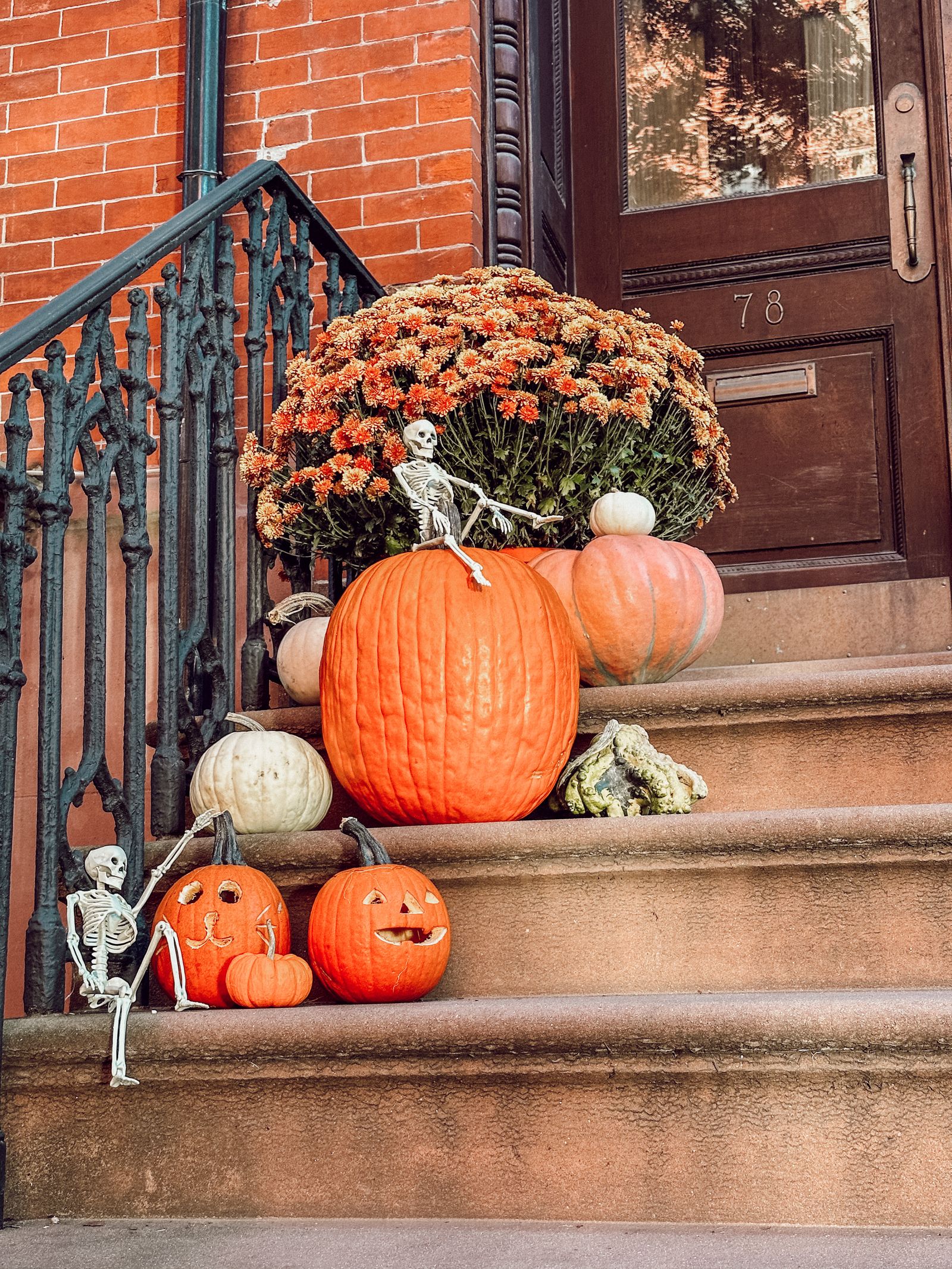
A useful doorway display has a clear centre, a supporting detail and enough empty space to read as an arrangement. Start with a pumpkin, wreath or sign at a scale that suits the door. Add one supporting texture, such as a basket or a small cluster of leaves, rather than surrounding it with many competing objects.
Check the arrangement from the approach to the door, not only from directly in front of it. A decoration positioned for a close-up photograph may disappear from the pavement. Conversely, an oversized item can dominate a narrow hallway or make entry awkward.
If you are using an outdoor area, read the product’s intended-use instructions before buying. Do not assume that an item photographed outside is suitable for wet conditions. Consider where you will put it if the weather changes and how you will secure it without obstructing the entrance.
Give a small room one strong Halloween corner
In a compact home, concentrating the theme can work better than scattering small decorations everywhere. Choose a sideboard, bookcase section or table end. Remove some everyday objects first; adding seasonal pieces on top of existing clutter rarely improves the result.
Try a group of three different heights: a framed silhouette at the back, a medium object in front and a low tray holding the smallest details. The exact objects are less important than the relationship between them. Leave space around the group so each part can be seen.
Keep the room usable. A themed coffee table still needs somewhere to put a cup. A decorated reading corner should still have enough light to read. If the setup makes ordinary activities awkward, reduce it before buying another item to solve the problem.
Use lighting as an accent, not a cover-up
Test the display at the time of day you expect to enjoy it. An arrangement that looks attractive in afternoon sunlight can feel flat after dark. Place your chosen lighting near the focal objects and look again from the room’s normal viewing position.
The U.S. Consumer Product Safety Commission recommends flameless lights or glow sticks in accessible Halloween displays and keeping entrances clear. Check decorative lights for damage and follow their instructions. This guide does not recommend placing real flames inside homemade paper or fabric decorations.
Consider the practical details: where the power comes from, how long the lighting needs to run and how you will switch it off. If an item requires batteries, check whether they are included and whether you already use that size at home. A reusable decoration is more useful when its ongoing setup is straightforward.
Make the table festive without losing serving space
A table display should support the evening. Put the dishes and glasses in position before adding decorative pieces. That immediately shows how much surface is genuinely available and where a tall object would block conversation or serving.
Use a restrained base, such as plain fabric or a simple runner, and repeat the doorway colours in small details. A few themed labels or place cards can do more than another large centrepiece. If you are serving food, keep decorative materials separate from serving surfaces unless they are intended for that use.
For a wider plan, pair this with our Halloween party guide. Deciding the menu and serving arrangement first helps you buy decorations that fit the table instead of rearranging dinner around a prop.
Compare decoration bundles with individual items
A bundle can look economical while containing many pieces you will not use. Count the elements that fit your plan and compare the bundle price with buying only those elements separately. Do not divide the total by the advertised piece count unless all those pieces are genuinely useful.
Read the dimensions carefully. A product photograph can make a compact decoration look substantial, especially when there is no familiar object nearby for scale. Check whether stands, hanging equipment or batteries are included and whether the photographed quantity matches the package quantity.
For items bought online, check delivery estimates and the return conditions that apply to your order. A clear arrival date is more valuable than an impressive-looking saving on an item that will reach you after your celebration.
A last-minute version that avoids panic buying
If you have one evening, simplify the plan to a doorway or one room corner. Use objects already at home, add one easily sourced focal detail and stop. Do not make a short deadline the reason to buy a large matching collection.
Write a compact list with three columns: already available, still needed and optional. Buy only from the middle column first. If a needed item is unavailable, choose a substitute that serves the same purpose rather than expanding the theme to accommodate several new products.
The same approach works with costumes. Our last-minute Halloween costume guide starts with clothes and accessories you already own, so you can coordinate the evening without starting two separate shopping projects.
Plan storage before deciding something is reusable
Reusable is a practical category, not just a label on the package. Ask where the item will live, whether it can be packed without damage and whether any small parts are likely to get separated. A bulky object that has no storage space may be a poor choice even if you like its design.
Before packing, take a photograph of the completed display and note what you actually used. Keep fixings with the relevant decoration where appropriate and follow storage instructions. Label the box by area, such as “doorway”, rather than relying on memory next year.
Also record what you would not buy again. An end-of-season sale is not automatically good value if it encourages you to repeat the same storage or setup problem.
Your final Halloween decor shopping checklist
- Choose two or three focal areas and measure them.
- Set one visual direction and a spending ceiling.
- Check existing supplies before adding to the list.
- Compare package contents, dimensions and required extras.
- Confirm indoor or outdoor suitability and delivery timing.
- Keep entrances and everyday surfaces usable.
- Leave a reserve and decide how the items will be stored.
The most convincing Halloween atmosphere usually comes from a few deliberate choices working together. Buy for the space you have, test the arrangement before the evening and keep enough room for the people who will enjoy it.
Continue with our Home & Garden guides for more practical buying checklists. Research reference: U.S. Consumer Product Safety Commission, Halloween Safety: Tips for Selecting Costumes and Décor. Budget amounts in this article are illustrative planning allocations, not retailer offers.